
The Dongle Rig From a Norwegian Perspective
Producing rigs in the “dongle manner” offers new methods, possibilities, and straightforward approaches to performing effective catch and release with big baits. Whilst sea fishing I have been using various types of hair rigs to good effect for years. However, when I was made aware of the Dongle Rig I knew I had to try it for myself as a way to successfully fish larger baits whilst minimising danger to the fish.
Why The Dongle Rig Should be Part of Your Rig Wallet
To me, using big baits usually provides two outcomes:
1.) A lot of crab activity
2.) Screaming reels.
The first option is often the most frequent, but when I do get hooked into a decent fish, I would like to hold all the aces in my hand. Adding some Dongle rigs to my rig wallet, gives me the confidence to meet any obstacles whilst chasing that next specimen catch.

The Dongle Rig Through Norwegian Eyes
From a Norwegian perspective; the Dongle Rig is simply a Pennel Rig without the bottom (instead, just the top hook). Make no mistake, Pennel Rigs are great for big, beefy baits, but a hooked fish can easily take life-threatening damage when deep hooked. Hooks not landing in a fish’s mouth will make it easier to get stuck in something it shouldn’t throughout the ensuing fight. I’ll take a bait with one well-placed hook, rather than two, every day of the week. The Dongle rig gives me the opportunity to place the hook exactly where I prefer to have it.
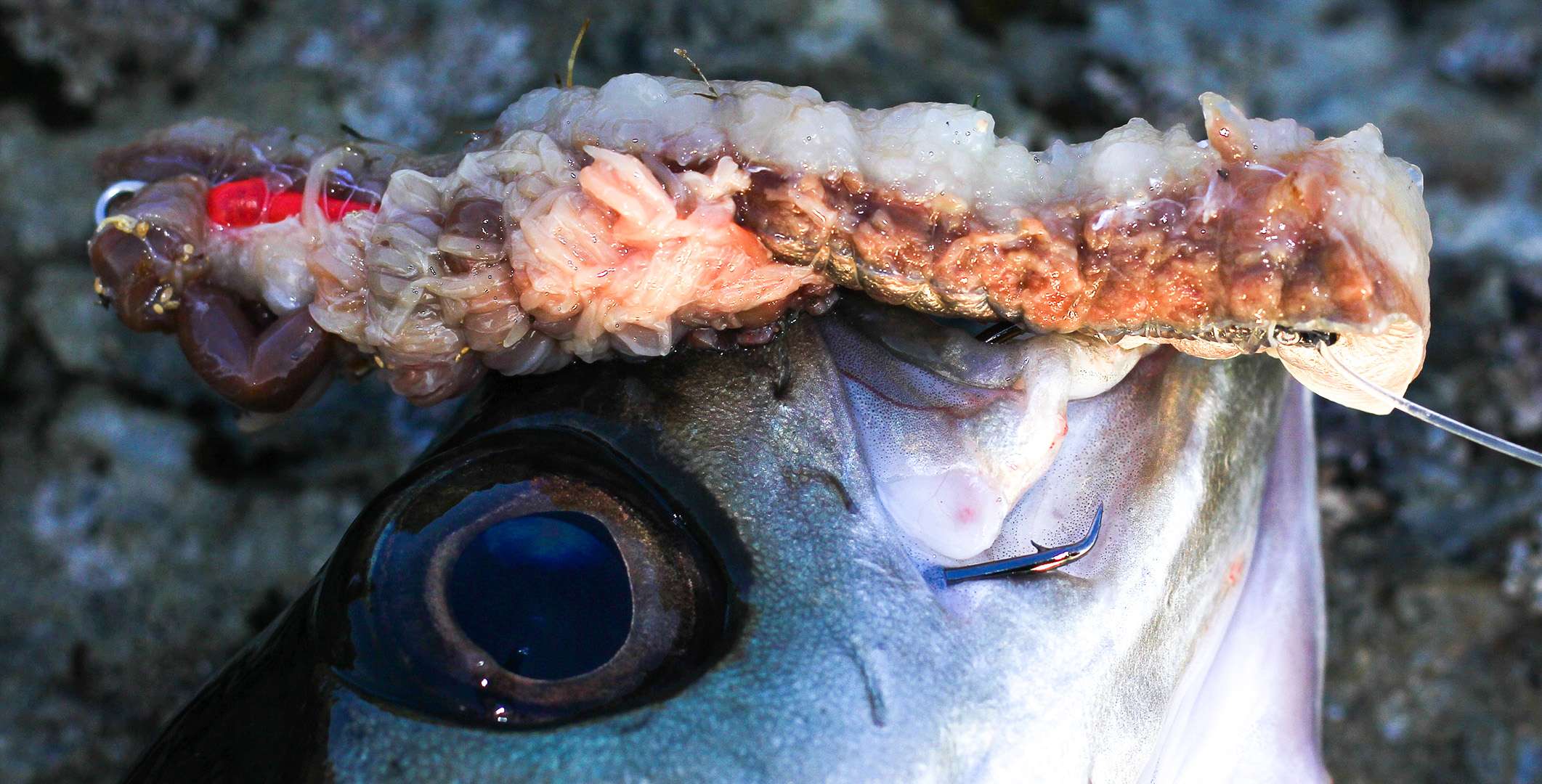
Perfect Bait Presentation is Made Easy With the Dongle Rig
Bait presentation is for me the key feature of the Dongle rig. It has become a crucial way to rig a big bait fish, as I like to hook them through their lips. This provides what I think is the best way to hook a big bait. Casting this thing is painful, and I primarily use it for close shore work like when fishing for Congers. Larger bait has its limits when casting further out. In this manner, I can still lip hook my whole herring baits and be able to clip the bait down behind the lead, ready to be sent out towards the horizon.

Practicing Effective Catch and Release
I can’t say that I am a fan of Pennel Rigging, as it makes performing catch and release much harder. Being a keen shore specimen angler, I take pride in taking only what I need for a few dinners. The biggest specimens of any species are always released and on occasion, the smaller ones are kept for food.


Avoid Deep Hooking Your Catch
I find using the Dongle rig especially useful when targeting species that are likely to be deep hooked, when using big baits or simply when using circle hooks in general on distance. Presenting the bait on a dongle will also make it possible to use smaller hooks as well, because most of the hook is exposed and not buried in the bait.
J-hook or circle hook
I find Circle hooks working so well for my uses that I have down-scaled the use of J-hooks.The Circle hooks have all the purposes for getting a good hook hold in a fish mouth and I like the way they allow me to release unwanted fish that I don’t intend to eat.
I find fishing for Congers with circle hooks confusing as they are almost impossible hook with a circle hook, but I hate deep hooked Congers as well. For this kind of fishing, I have made up some hook lengths with J-hooks and dongles. Most of the time I am lip hooking a Mackerel when fishing for Congers, but I believe putting that little extra distance between hook and bait can make a difference.
Here in Norway, clipped rigs are rarely necessary for Congers. On my locations where I find Congers, I catch them under my boots and 30 meters out. The whole principal of a clipped Dongle rig is gone for this kind of fishing, but I like the idea of presenting the bait on a hair to prevent deep hooked Congers.


Lasse Bøe
Cox & Rawle Ambassador
My name is Lasse Bøe, 33 years old from Karmøy in the west coast of Norway. I make my living in health care, dealing with drug addicts and psychiatric patients. I am a writer for the Norwegian website www.fiskeavisen.no, as well as a consultant for the Norwegian bait making company Attraqua.
Fishing has been something that has defined me, starting with sitting on dad’s knee by the creek fishing for small trout. I never leave anything up to chance, and by designing rigs, collecting baits, studying maps, doing a lot of field testing and always being curious to try other ways – I refine my fishing and specialize in what I love the most – specimen angling from the shore. My goal is to catch big fish from the shore, and prove to everyone that a boat is not always the best way to catch big fish.
It is off course the easiest way to catch them from the boat, but where is the fun in that? I have always believed that if you make it right, it is possible to catch huge specimens from the shore.
Recent Posts
Keep up with the latest posts on the blog, all the news and product reviews. Hints and tips.
Thornback Fishing with John Locker
Thornback Fishing with John Locker Though spring may mark the arrival of many migratory birds and insects, it heralds few notable changes in Britain’s marine environments, especially though the eyes of us anglers. The result of the sea taking longer to succumb to the...

No Bait, No Problem: Catching Bass with Simple Lures
No bait no problem: catching bass with simple LURESTravelling to the coast to find out you have left your bait at home in the fridge is enough to keep and Angler up at night. Fortunatly however, Cox and Rawle Ambassador Martijn Dekkers' shares a simple rig design...

SCR20 Stinger, A Fantastic All-round Hook.
Words and imagery from ambassador, Martijn DekkersWhen hunting for a certain species of fish, efforts should be made to catch that species specifically. Factors such as the right tide, the best time of day or night, the season, and the fish’s preferred depth of water...