
Dongle Rig Guide 2022, Insights From James Madsen
Words and images from James Madsen.
With this article first appearing in Sea Angler Magazine (July 2022), Cox & Rawle ambassador James Madsen details the background of the Dongle Rig and how to use them.

Introducing the Dongle Rig
Cox and Rawle have just completed their ready-tied version of the dongle rig. It seems like sea anglers all over the country are eager to get their hands on these rigs. From what I hear, there are many anglers who are already enjoying some great results with the dongle rigs as well. A dongle is something you attach your bait to. It was primarily rigged to fish baits below the hook when fishing with a single circle hook. Many anglers now also use a dongle when they want to fish a single J hook in the top of a bait. A major advantage of using a dongle is that it gives you the ability to clip a bait down next to your lead for distance casting and in doing so has eliminated the need for a second hook in the bait. The dongle idea itself originated in South Africa where it is known as the ‘Dingle Dangle’ rig.
Circle hooks are widely used in South Africa because they believe in good fish conservation. In fact, when it comes to competition fishing in South Africa, the rules often state that all of the competitors must use circle hooks and J hooks are completely banned from their sea fishing events. You see, in order for a circle hook to work correctly you need your bait sitting at the lowest point of the gape on the hook. The South African anglers created the Dingle Dangle because it gave a perfect bait presentation on a circle hook and made the bait more aerodynamic when clipped down on a rig for distance casting. This was particularly crucial when they wanted to fish big baits out at good casting distances. As it happened, international anglers from Great Britain actually copied the Dingle Dangle rig from the South Africans whilst fishing on international fishing duties out in South Africa. Basically, the Dingle Dangle rig became the Dongle rig once it had landed on home soil. I know these guys could see all the advantages of using circle hooks in their domestic fishing, especially in certain competitions, where they felt it may give them a slight edge on the rest of the competitors. By doing so they have now, somewhat inadvertently, started a new craze in British sea fishing.

A hound caught by James using the new Dongle Rig
The Best Way Forward
There are a number of very good reasons why it’s worth switching to using circle hooks on our rigs. The most important reason for most anglers has to be better fish conservation. A circle hook, when rigged correctly, nearly always catches in the mouth of a fish and avoids deeper hook-ups around the more vital organs, like the gills and gut. Seeing as most anglers these days like to practice better catch and release when fishing, using circle hooks seems to be a bit of a no brainer with that regard. Another massive advantage for anglers using circle hooks is to cut down on tackle losses when fishing over rough ground. Because the point of a circle hook faces at ninety degrees to the shank, it’s much less likely to get caught up in the seabed. Losing less tackle on the seabed is not only good for our pockets in monterey terms, it’s also better for the environment. One more advantage for anglers using circle hooks is missing less bites, especially when it comes to the faster running fish. Mind you, there is a bit of a knack to fishing with a circle hook and more often than not we need to be a little more patient with our bites. The main aim when fishing with a circle hook is to allow the fish to hook themselves. There should be no need to strike when fishing with a circle, the hook needs to find its own way into the mouth of a fish. Success when it comes to bite to hook-up ratios is also determined by how you have rigged up your circle hooks and bait. There is definitely a bit of science to the working of a circle hook with a dongle and we need to fully understand its function in order to truly reap the advantages when fishing with this rig.

The Dongle is attached to the hook shank.
Designed by Experts
Cox and Rawle’s Dongle rigs have been designed by anglers who have been fishing successfully with circle hooks now and for some time. Essentially, this is a single circle hook pulley rig with a dongle attached. When taking a look at the business end of the rig you will notice the circle hook has been attached with a perfection loop and the dongle itself moves freely up and down the hook shank. It’s smaller details like stated above which can make all the difference and increase our success rate. Cox and Rawle have also brought out a very useful dongle clip that allows you to easily attach your bait to your impact release clip before casting.
Baiting a Dongle
Baiting up the dongle rig is pretty straight forward but would be made a whole lot easier with the use of a good baiting tool. In my eyes, Cox and Rawle already have the perfect tool in their range for baiting up the dongle. Their 16cm double pronged bait loader is easy to handle and a great length that will cover a good variety of different sized baits. You will need to marry up your bait size to the length of the dongle on the rig. When baiting up we should also make sure that we leave the dongle clip, found at the bottom of the rig, exposed. My advice would be to attach your bait to the baiting tool first with elastic. By doing this you can more easily work out the correct size for your dongle. Once baits are sized up correctly, just nic the circle hook into the top of your bait and use elastic to fix your bait firmly to the dongle. All you need to do next is attach your dongle clip to the impact release clip on the rig and it will be ready for casting. It’s also worth noting, when clipped up, these dongle rigs from Cox and Rawle are exceptionally aerodynamic and built for casting good distances.

Cox & Rawle Dongle Rig and Baiting Tool
In Range
By all accounts, Cox and Rawle are launching a good selection of different dongle rigs in their range and they are also selling all of the accessories. It’s looking like you will be able to buy rigs with circle hooks ranging from 3/O to 6/O. The dongles themselves will come in a variety of different lengths and will be made from wire and braid. If you like to tie your own rigs, all the components needed to make a dongle rig will be sold separately. Cox and Rawle will also be selling the circle hooks separately with a dongle attached and they will also be available in a range of different lengths and hook sizes.
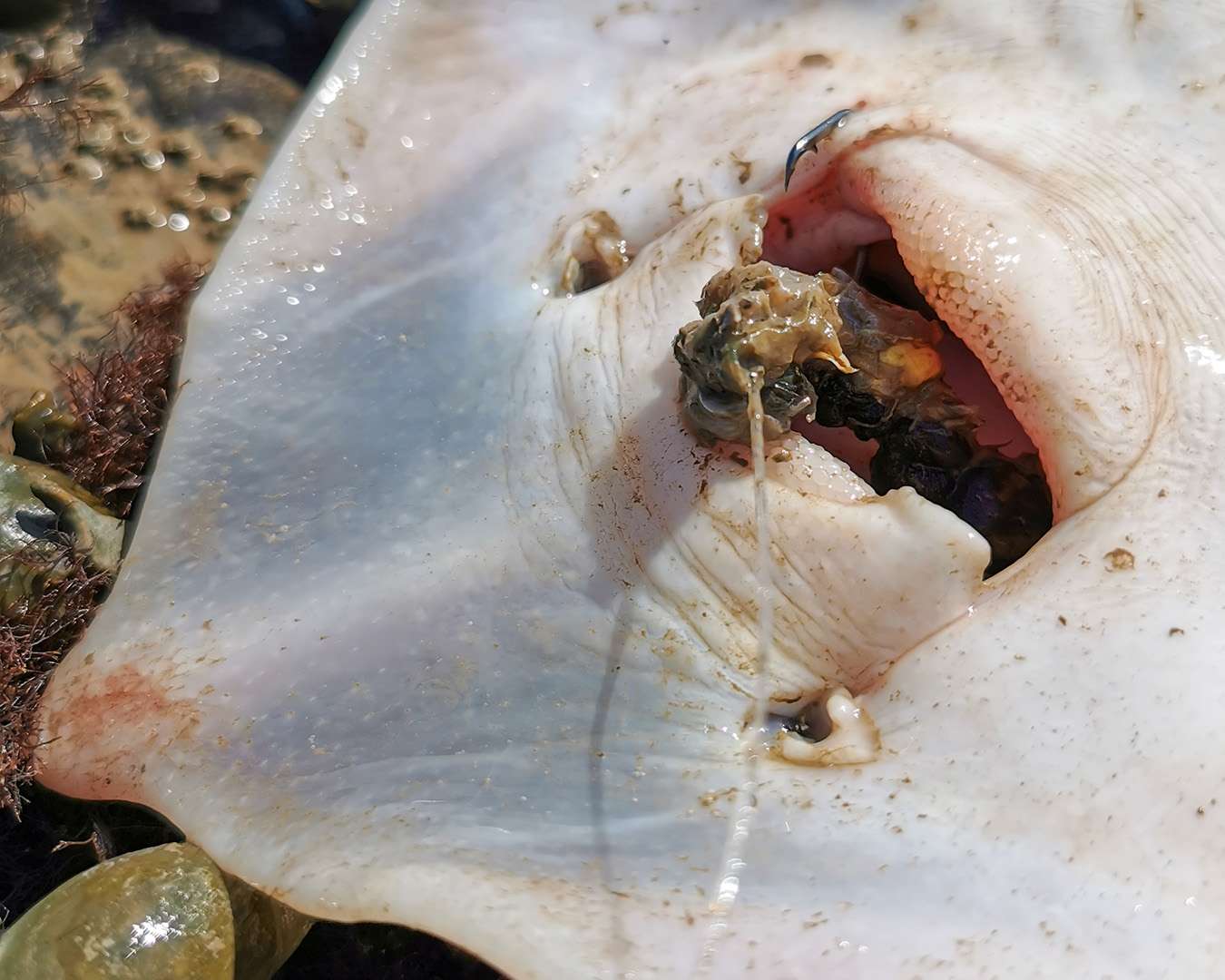
The Circle Hook avoids deep-hooking fish

James Madsen
Cox & Rawle Ambassador
A big thanks to James Madsen who has worked closely with us here at Cox & Rawle for several years now, he likes trying out and testing products for us and always gives an honest recommendation.