
Five steps to rough ground fishing
Underwater structures and vegetation are places where smaller fish thrive and makes perfect feeding ground as well as cover from predatory species. Both prey and hunter will find what they seek around these structures, and so do we as anglers.
The essential way of fishing rough ground marks is to keep the losses of tackle as low as possible. There are several ways of doing this. As a shore angler this can turn out the be expensive, but the losses can be cut with some adjustments and a few tricks in mind.
Step one: Hook Choice
The choice of hook is important. When fishing rough ground marks, I prefer a hook that bends rather than breaks. For this kind of fishing, I have fell in love with the Cox & Rawle Surf & Uptide’s. They are strong for most of the fish I fish for, and soft enough to be released from a rock when snagged.
Circle hooks is also worth taking into consideration. Circle hooks like the Cox & Rawle Mutsu’s seems to snag less far less than traditional J-hooks, due to the bend on the hook point.
Personally, I like single hooks in my baits, rather than pennel rigs. Two hooks do increases hook-ups in a fish mouth, but also doubles the chances of catching in something you don’t want to. There are plenty of rocks and seaweed down there. Single hooks also make it easier to release fish. I like to choose my future dinners, rather than been stuck with a lot of dead fish that have inhaled two hooks.
When Conger is my targeted species, I have no doubt in my mind. The Cox & Rawle Meat Hooks in size 6/0 makes a perfect specimen hook.


Step Two: The Weakest Link
The pulley rig is indisputably my most used rough ground rig. It is quick to tie, inexpensive when the amount of terminal tackle is kept to a minimum and performs well – specially when retrieving with a fish on the end.
Every rough ground rig should have some sort of weak link that saves the main part of the rig – the part with the fish on. The weak link in my rigs is normally made from mono.
I would rather sacrifice my sinker than the whole rig, so a weak link is required. The weakest point in my setup is normally my 30lb mainline of either braid or mono. I have been testing all sorts of breaking strengths for my break line and came up with a compromise of 20lb with a couple of knots on it. Lighter lines like 10 or 15lb seem to drop my sinker too often.
Step Three: Rod Choice
In a time when everyone is eager to fish as light as possible to achieve most of a captured fish, rough ground fishing is almost opposite. Here in Norway, where I fish, we have deep water and possibly big fish close to the shore. We have plenty of rough ground marks where you can reach 300 feet of water, and the rods must cope with fishing conditions.
I love to fish light, but rough ground fishing is a different sport. The last two years I have been using the infamous Ron Thompson Axellerator’s for rough ground fishing. They are beasts and gives me little pleasure, but the marks I usually fish, requires this kind of tackle. Heavy tides, deep water, heavy leads and big baits does something to a man…
Fishing with heavy rods is exhausting, but in the long run I gain more than I lose. I land more fish with heavier gear, lose lesser rigs and fish more efficient.

Step five: Think safety!
No matter how perfect a fishing mark can be as a camp location, it is useless if landing fish is dangerous. Always think safety when rigging up your tripod and setting up camp. Think at least two steps ahead. Getting hooked on that dream fish makes people drop their guards and expose themselves to danger. Loosing the fish of your life is a trifle compared to losing your life.
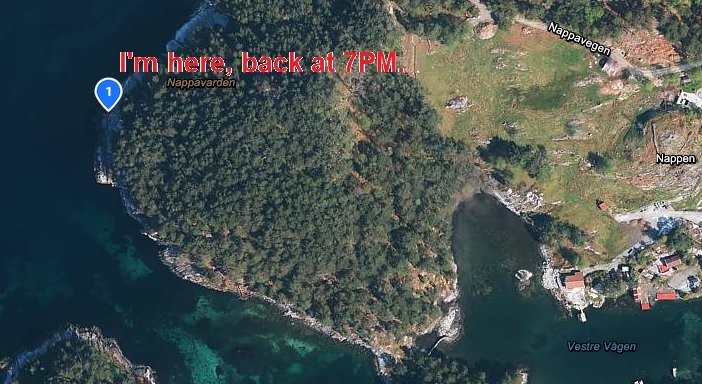
When fishing rocky marks, I prefer to have company for safety reasons. If not, always tell someone where you are and when you are expected to be home. In these times, when everyone is carrying a smart phone, you can be precise when sharing a map.
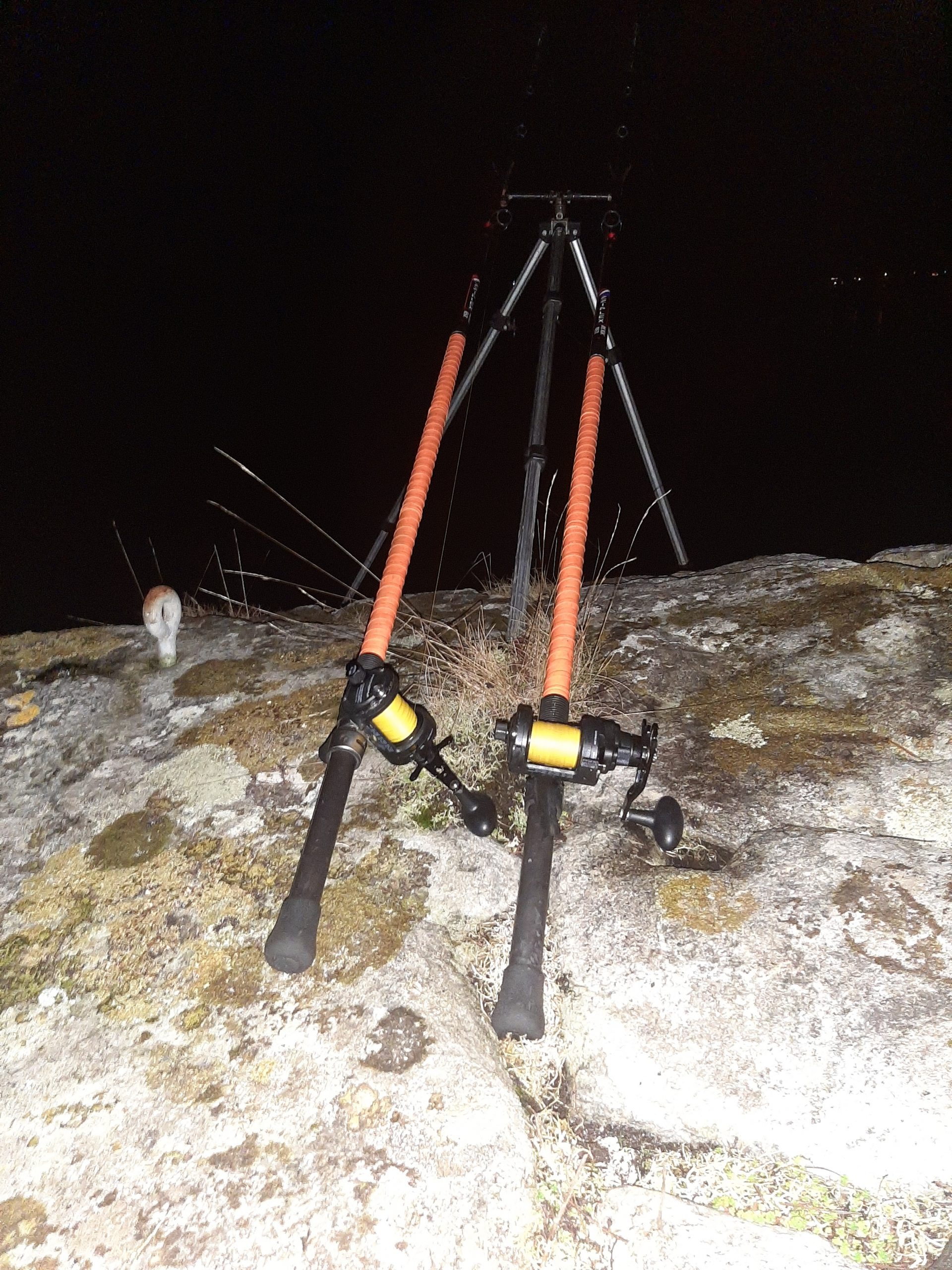
Whether it is daytime or a night session, take your precautions and plan where you are placing your tripod and where you intend to land the fish. The tripod location is also the most likely spot to fight a fish, and you could require a bit of space.

We all pursuit that moment that keeps us going. I am no different. Chasing adventures is my drive and when I have checked off another challenging assignment, I have coughed enough courage to keep my wheels going.


Step Four: Choice of reels and line
Fighting fish over rocky structures, seaweed and mussel beds requires reels with a high torque and fast retrieve. I prefer power over finesse, and the main objective is getting the fish to shore after all. Overkill is for me the way to go to get my fish and my tackle back.
My personal reels of choice are the Penn Fathom II Casting Specials, carrying 30lb braid and a 90lb shock leader. This setup works excellent when I fish most of my rough ground marks. Braid is also preferred when fishing deeper marks as well, as most of my marks are. Sadly, braid has terrible abrasion resistance when dragged over a rock, and will snap before you have the time to say something that starts with F.
As a backup setup I carry two Penn 535’s loaded with 30lb mono for shallower, even rougher marks. These marks are rarely far from the shore. Mono has excellent abrasion resistance compared to braid and stretch a lot. When I fish these marks I omit shock leaders, and I fish most of the time without shock leader. Carrying reels with both braid and mono, I can change tackle regarding of condition, mark and expectations.

Recent Posts
Keep up with the latest posts on the blog, all the news and product reviews. Hints and tips.

How to Make a Dongle Rig: Braid
I get a lot of questions from fellow shore anglers here in Norway – both visiting from the UK and locals, and one is about my favourite rig. In the past, it has been a somewhat difficult question to answer as I have been experimenting with different rigs, hooks, and...

The Dongle Rig from a Norwegian Perspective
Producing rigs in the “dongle manner” offers new methods, possibilities, and straightforward approaches to performing effective catch and release with big baits. Whilst sea fishing I have been using various types of hair rigs to good effect for years. However, when I...

Premium Bait Elastic from Cox & Rawle – 3 Strengths 5 Colours
Cox & Rawle Premium Bait Elastic - 3 Strengths 5 coloursPremium Bait Elastic is now available at Cox & Rawle, an essential choice for every anglers tackle box.Not All Bait Elastic is the Same! Cox & Rawle has always offered the best of British terminal...